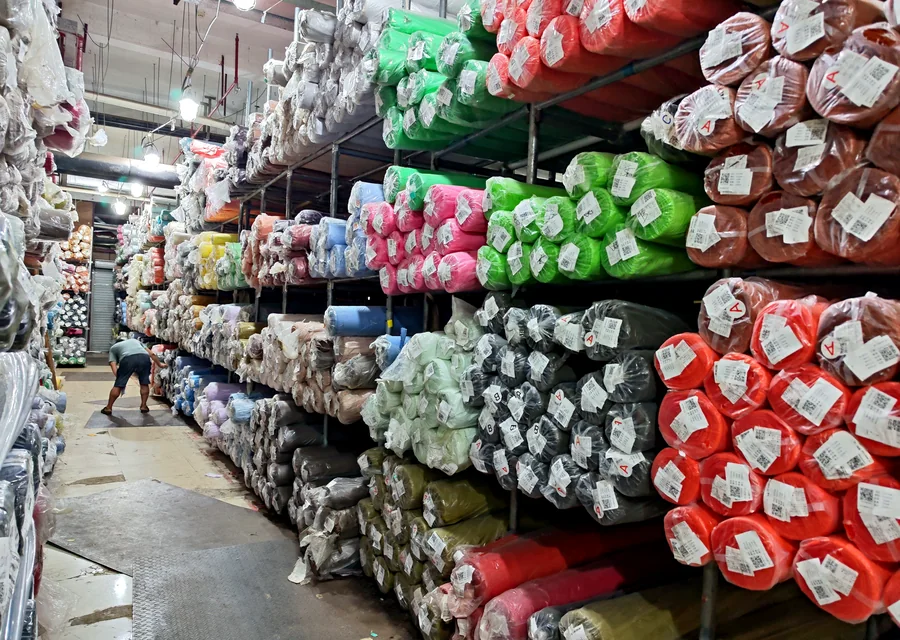
A color name is a starting point, not an approval. “Ivory,” “dusty rose” and “navy” can describe many different shades, and a phone photograph does not give every person in a sourcing conversation the same reference.
A useful lab dip approval process connects a defined color target to a specific fabric, an agreed review method and a written production decision. It also separates approval of a small dyed sample from approval of the bulk shade.
What is a lab dip, and when do you need one?
A lab dip is a small dyed fabric sample developed to match a color target before a larger dyeing run. It helps buyers and suppliers review a proposed shade on the intended material. It is not a complete garment sample, a fabric performance report or proof that every production roll will match.
First establish the order route. For an existing stock color, ask for a representative swatch and identify the available lot. For a new dyed color, discuss a lab dip route. Printed designs need an appropriate print sample or strike-off; approving a solid-color lab dip does not approve the printed design, scale or placement.
YAQIXIN's custom fabric capability page describes color and reference intake. Share the base fabric and quantity early so the team can confirm a practical sample route.
Define one color reference before sampling
Send a physical reference or a clearly identified textile color standard. If you use a Pantone reference, include the complete code and system, rather than a cropped screenshot or color name alone. Pantone advises checking digitally selected colors against a physical representation.
Add the fabric item, fiber composition, construction and intended finish. A reference on one material is not a promise of identical appearance on another. Decide which reference takes priority if a color card, old garment and photograph disagree.
For a repeat order, identify the previous approved standard and ask whether the new order uses the same base and finish. A saved image cannot replace the retained approval sample.
Review the shade in its garment context
Compare the sample with the agreed standard under defined viewing conditions. Record the light source or viewing arrangement used for approval, and discuss any additional lighting relevant to the garment's use. Colors that appear close under one light can look different under another; this is known as metamerism.
For sheer tulle, organza or lace, keep the lining color, backing and layer count consistent during comparison. A pale overlay over ivory lining may look different from the same overlay over white lining. For satin, review the face and intended direction together because reflected light affects appearance.
If a dress combines several fabrics, judge them as a set. A matching color code on satin, lace and mesh does not automatically create a coordinated finished garment. Request a sample arrangement that represents the intended combination.
AATCC EP9 describes a standardized approach to visual color comparison. Where a brand requires formal assessment, agree the appropriate method with the supplier or testing laboratory. An informal desk comparison should be recorded as an informal review.
Set an acceptance method without inventing a universal tolerance
Some programs use visual approval, some use instrumental measurement, and some combine both. If a numerical color difference is required, agree the formula, measurement conditions and acceptance limit before sampling. Conditions can include the agreed illuminant and observer, instrument settings and sample presentation. A number labelled “ΔE” without those details is an incomplete instruction.
There is no single threshold that should be copied into every fabric order. The required appearance, material and buyer specification determine what must be agreed. X-Rite's textile workflow links color standards, tolerances, measurement and visual coordination before production approval.
Color matching also differs from colorfastness. A sample can match the target yet still need separate evaluation for washing, rubbing or other intended-use requirements. Do not treat shade approval as approval of all fabric performance.
Keep the approval stages separate
On a phone, swipe the table sideways to compare every column.
| Stage | What the buyer confirms | What remains to be checked |
|---|---|---|
| Target reference | Standard, fabric base and finish | Proposed dyed match |
| Lab dip | Identified shade option against the standard | Bulk shade and roll consistency |
| Bulk shade sample | Production shade against the retained approval | Agreed inspection across the order |
| Shipment release | Inspection records and agreed acceptance | Receiving checks and lot traceability |
Agree whether a bulk shade sample must be submitted before cutting or dispatch, and who can approve it. Keep the approved lab dip and bulk reference with the written specification. Ask how different dye lots and rolls will be identified, especially when one garment uses several panels.
Record a decision that production can use
Label each submission with the item number, shade option, version and date. Feedback such as “more elegant” is hard to act on; specify which option was reviewed, which standard it was compared with and what needs adjustment.
A compact approval record can include:
- Fabric item, composition and finish.
- Target reference and submitted sample ID.
- Viewing conditions, backing and layer arrangement.
- Agreed assessment method and result.
- Decision: approved, revise or rejected.
- Approver, approval date and next required sample.
Allow time for review, revisions and sample delivery in the order schedule. Confirm these steps for the actual project rather than assuming a fixed number of rounds or a universal lead time. Use the fabric sample inspection checklist for the broader fabric review.
Frequently asked questions
Can I approve fabric color from a photo?
A photograph can help communicate a direction or discuss a revision. For a color-critical order, use a defined physical standard or an agreed professional digital measurement workflow. A casual phone photo is not equivalent to either.
Does an approved lab dip guarantee the bulk color?
No. It approves an identified sample against the agreed reference. Define a separate bulk shade approval and inspection route so production is checked against that reference.
Can lace and satin use the same color target?
Yes, but approve the coordinated result on the actual materials and lining. Differences in texture, transparency and reflection can change the appearance even when the color target is shared.
Prepare your custom color inquiry
Send your fabric item or base requirement, complete color reference, intended garment, coordinating materials, quantity and required delivery date. Include any brand color specification and approval requirements. Contact YAQIXIN to discuss the available sample route before confirming a bulk order.
Ready to discuss a fabric brief?
Share your intended application, a reference image or swatch, quantity, and market. We can help you compare a stock or custom fabric route before you place a bulk order.
Start a fabric inquiry