A buyer in Melbourne sent us a brief for 40 metres of cotton twill in three colours. She needed it for a capsule collection — twelve shirts, a handful of samples, and a market test. Three suppliers had already told her no. The fourth said yes, and the order shipped in five days.
That gap between "no" and "yes" is almost never about the fabric. It is about minimum order quantity: the number a mill needs before a production line becomes worth switching on. Most buyers treat MOQ as a fixed wall. It is closer to a price tag on a decision — and like most prices, it moves when the reason behind it changes.
This guide explains where fabric MOQs actually come from, how our own minimums work, and how to structure a request so a supplier has a reason to say yes. It is written for buyers placing a first order, testing a colour, or moving from a marketplace listing into a direct relationship.
What MOQ actually measures
MOQ is a break-even number, not a policy. A mill calculates the fixed cost of starting a run — dyeing vats that must be filled to a minimum level, looms that need threading, technicians who set up colour and tension — and divides it by the margin on each metre. Below a certain length, the run loses money regardless of unit price.
This is why the same supplier can quote 10 metres for one fabric and 1,000 metres for another. The difference is not mood or favouritism. It is the setup cost behind the specific construction.
| Order route | Why the minimum changes | What it means for a buyer |
|---|---|---|
| Stock fabric, existing colour | No dyeing, no loom setup — the roll is already on the shelf | Lowest possible entry; ideal for samples and test runs |
| Custom colour on a stock base | Minimum dye-bath load; lab dip and colour approval add work | Minimum rises to a batch level, typically a few hundred metres |
| Custom print, embroidery or flocking | Separate setup per design — screens, digitising files, flocking plates | Minimum scales to the complexity of the design, not the fabric |
| Custom weave or jacquard | Warp preparation, loom programming and trial runs | Highest minimums; development cost is often shared |
The practical takeaway: your MOQ is mostly determined by how far your order sits from what already exists. Choose a stock base and a colour we already hold, and the minimum collapses. Move into custom production, and it rises for reasons that are real rather than arbitrary.
How our minimums work
We publish our minimums openly, because buyers should be able to plan before they send an inquiry rather than after.
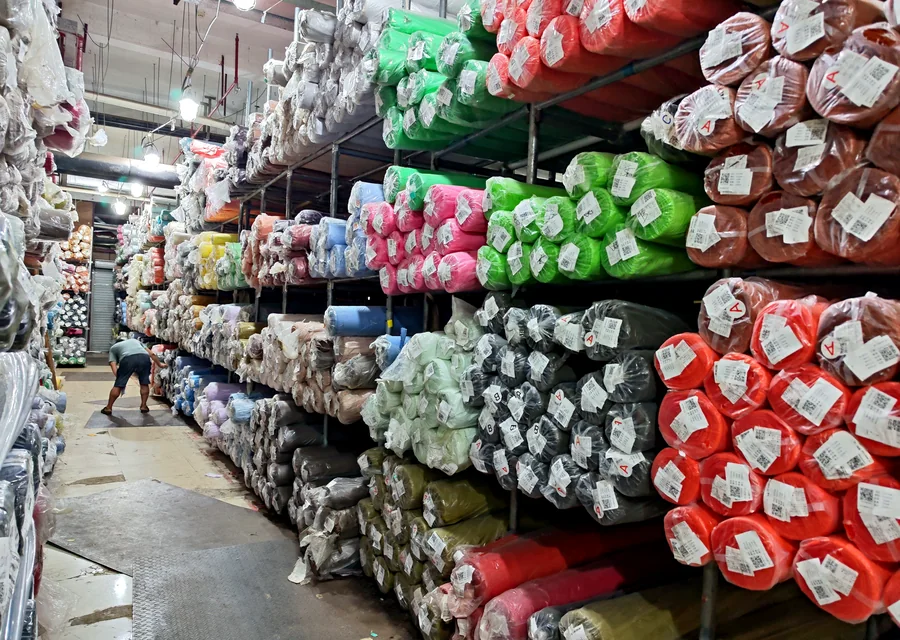
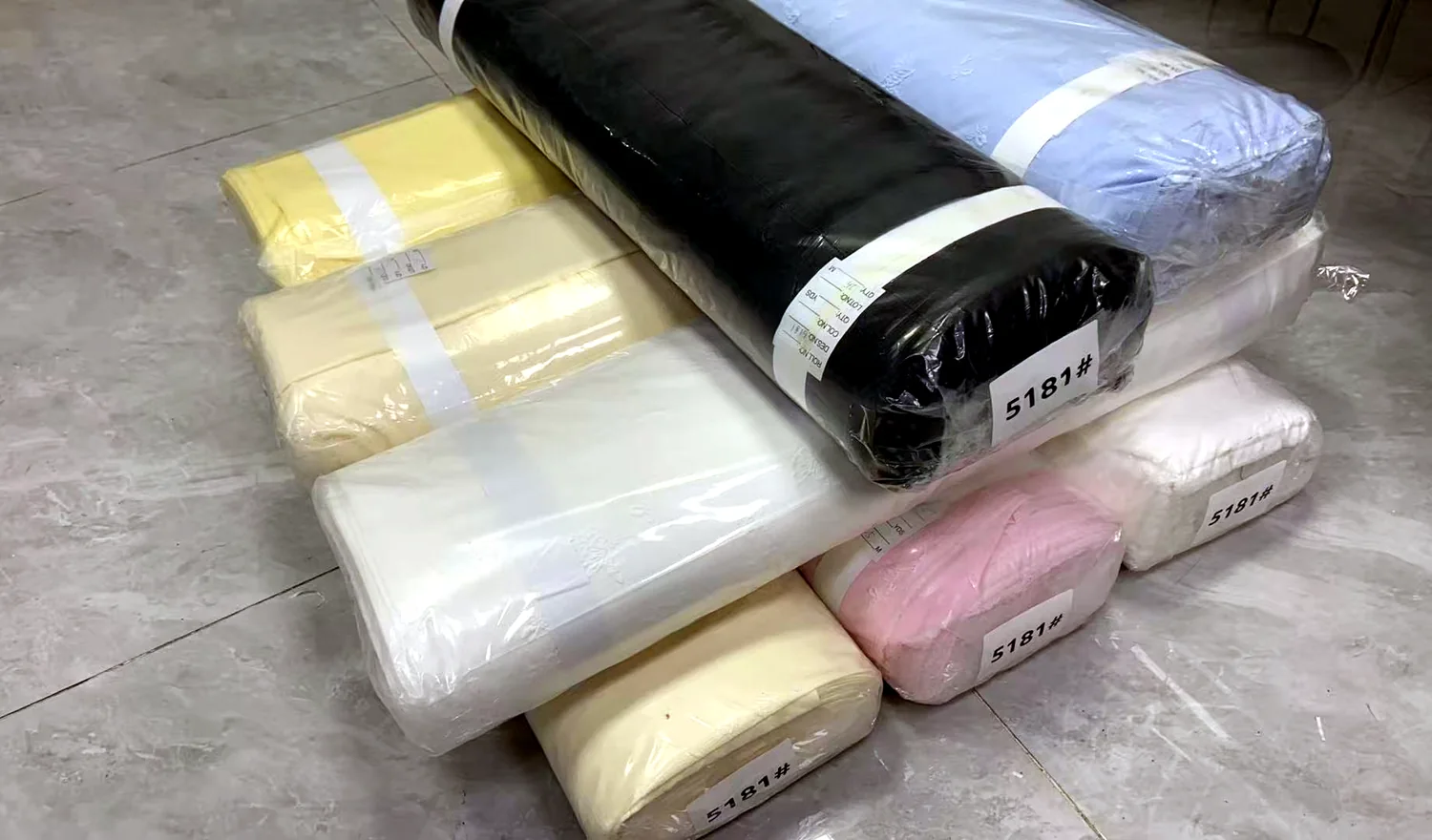
Selected stock items are listed from 10 metres. This is not a minimum for every fabric category. Other products may be sold in yards or pieces, and requirements can vary by item, colour and order route. Confirm the product code, quantity unit, current availability and minimum before planning a cutting trial or placing an order.
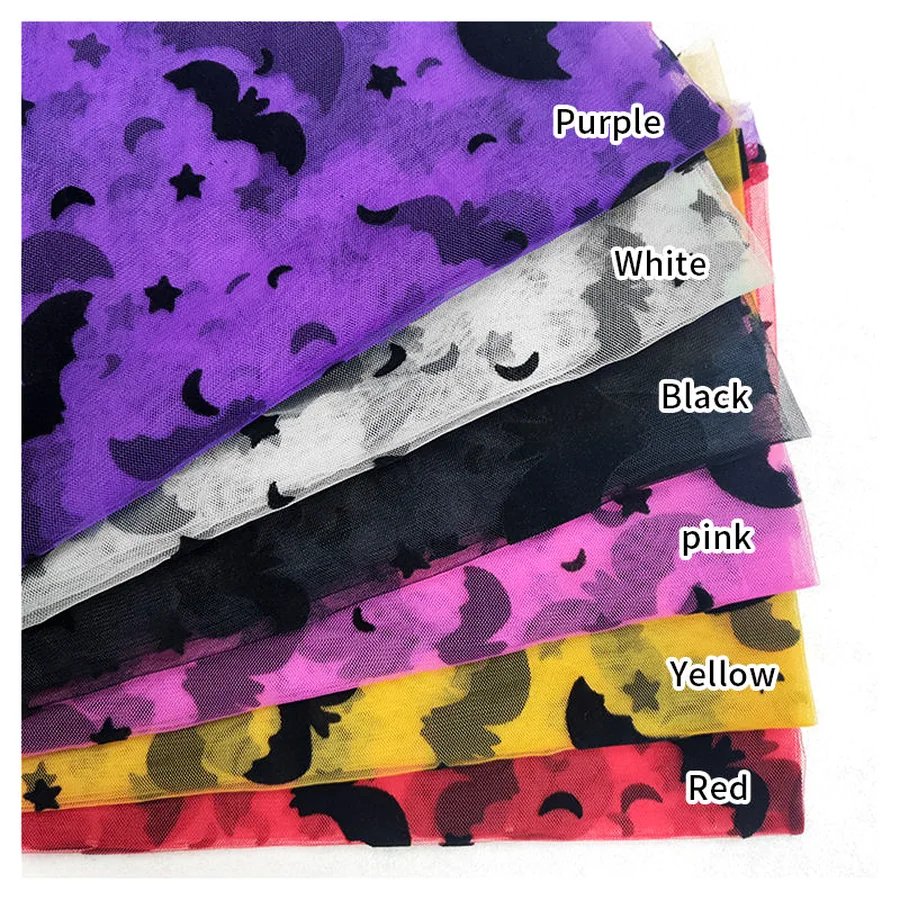
Custom work starts higher and is quoted case by case. Printing, embroidery and flocking each carry their own setup: a print design needs screens or a digital file prepared and calibrated on the fabric, embroidery needs a digitised file and a test stitch-out, and flocking needs plates and a run on the line. Those steps cost the same whether the order is 300 metres or 3,000, which is why custom minimums typically begin in the several-hundred-metre range and move up with design complexity and colour count.
Why custom minimums are higher, and what drives them
Custom production is where buyers most often expect flexibility that the process cannot offer. Understanding what actually drives the number makes negotiation easier, because it tells you which variables are worth arguing over.
| Custom service | What creates the minimum | What a buyer can adjust to lower it |
|---|---|---|
| Digital printing | File preparation, colour calibration on the base fabric, machine run length | Fewer designs per run; print onto a stock base fabric; combine designs with a future order |
| Embroidery | Digitising the artwork, test stitch-out, machine threading and setup | Fewer stitch colours; simpler artwork; reuse an approved digitised file on a repeat order |
| Flocking | Plate making, adhesive and fibre setup, line run length | Fewer colourways; a simpler pattern; placing flocking on a fabric we already stock |
| Custom colour | Minimum dye-bath capacity plus lab dip and approval rounds | Choosing a shade close to a running colour; accepting a wider tolerance; grouping colours into one batch |
Notice the pattern in the right-hand column. Almost every lever that lowers a minimum works by reducing setup, not by reducing price. A supplier cannot recover a screen-making cost from 80 metres of fabric. But if your design fits an existing setup, or can share a run with another colourway, the fixed cost spreads across a larger production quantity — and the minimum follows it down.
How to negotiate a lower minimum — five approaches that work
Negotiation on MOQ is not haggling. It is restructuring how the fixed cost gets covered. These five approaches are the ones that genuinely move a number.
1. Pay the setup separately. If you need 200 metres but the run requires 800, offer to cover the setup cost that the smaller volume cannot absorb. A buyer who pays a development or plate fee up front gives the supplier a reason to run shorter than the standard minimum. This is cleaner than asking for a discount you both know is uneconomic.
2. Choose a stock base fabric. Applying a custom print or finish to a fabric already in stock removes the weaving and dyeing minimum entirely. The only minimum left is the one created by the printing or finishing step, which is usually far lower. For buyers testing a design idea, this is the single most effective route.
3. Commit to volume over time. A first order of 300 metres is small. A first order of 300 metres plus a written intent to reorder across two seasons is a different conversation. Suppliers extend better terms to buyers whose total volume is predictable, because the setup cost amortises across the relationship rather than the shipment.
4. Reduce colour count. Each colour typically carries its own minimum, since the dye bath or screen set is per colour. Three colours at 300 metres each is often a harder order to place than one colour at 900 metres — and the single-colour version frequently carries a lower per-colour minimum.
5. Place the order in a slow period. Factory capacity is not constant. During quieter months, lines are open and setup slots are available, and a supplier is more willing to run a shorter batch than during peak season when every hour of machine time is committed. Timing is a real negotiating variable, and it costs nothing to use.
Confirm dispatch and delivery timing for your order
A low minimum is useful only when the order fits your schedule. Confirm current stock, any sample or colour approval, preparation time and shipment arrangements in the written quotation. Dispatch from the supplier and arrival at your destination are separate milestones.
| Order route | What to confirm before scheduling |
|---|---|
| Existing stock colour | Current availability, cutting, inspection, packing and dispatch date |
| Larger bulk order | Production or allocation plan, inspection, packing and shipment readiness |
| Custom development | Sampling, approval rounds, production scheduling and the agreed dispatch date |
Send your required arrival date and destination. Ask the team to distinguish sampling time, production time and transport time; do not use a general lead-time reference as a confirmed promise for your order.
How to structure a first order so a supplier says yes
Most rejected small orders are rejected because the inquiry did not give the supplier enough to work with. A message that reads "what is your minimum?" is hard to answer. A message that reads "I need 150 metres of this construction in this colour, I can be flexible on shade, and I would reorder in spring" is easy to answer.
Include these five items and the conversation moves faster:
- Construction and weight. Fibre content, yarn count where known, and grams per square metre. If you have a reference fabric, say so — it is faster than a written specification. Our fabric GSM guide explains the weight terms.
- Colour and tolerance. Give a Pantone reference and state how close you actually need to be. Willingness to accept a nearest running shade is often what makes a small order possible.
- Quantity, with a floor and a target. Say "150 metres minimum, 400 if the price improves" rather than a single number. It tells the supplier where the flexibility is.
- Intended end product. Shirts, workwear, bags and bridal overlays each put different demands on a fabric. It helps us flag a construction problem before it reaches production.
- Your date. The date you need the fabric in hand, counted backwards from your production start — not the date you would like it.
If you already have a garment idea but not a specification, the wholesale fabric sourcing guide covers how to turn a concept into a usable fabric brief. If you are still choosing between constructions, the poplin, twill and canvas comparison sets out how weight and weave change the finished product.
What this looks like in practice
We are a fabric supplier in Guangzhou, so treat this section the way you would treat any supplier describing themselves — as a claim to test on your first order rather than a reason to skip the test.
- Selected stock items listed from 10 metres; confirm the minimum and supply unit for the exact item before planning a cutting trial.
- Custom printing, embroidery, flocking and custom colour quoted with the genuine minimum and setup cost stated before the order, not discovered afterwards.
- Dispatch within 7 days for most small and medium stock orders, and around 20 days for larger bulk production.
- Lead time and price discussed together, so a faster date is a priced option rather than an assumption.
- Specification, price and MOQ published item by item on our product pages — you can check the plain cotton fabric range or a specific article such as the A2181 360gsm heavy cotton twill to see how that looks before you inquire.
If you have a quantity in mind but are unsure whether it clears the minimum, send it anyway. A 60-metre inquiry for a stock colour is a normal request, not an imposition, and knowing the real number is faster than guessing at one. You can also review our custom capability page for the development services behind the minimums described above.
Buyer questions
What is the minimum order quantity for fabric?
MOQ is confirmed by product, colour and order route. Selected stock products are listed from 10 metres; other items use yards or pieces and may have different minimums. Custom dyeing, printing, embroidery and flocking require a project-specific quotation. Confirm the quantity unit as well as the minimum.
Why is the MOQ higher for custom prints and embroidery?
Because the setup is per design and per colour, not per metre. A print needs screens or a prepared digital file, embroidery needs a digitised artwork and a test stitch-out, and flocking needs plates before the line can run at all. Those costs stay the same whether the order is 200 metres or 2,000, so a shorter run has to spread the same fixed cost across less fabric.
Can you lower the MOQ for a first order?
Often, yes — usually by changing the route rather than the rule. Applying your print or finish to a stock base fabric, reducing the number of colours, accepting a shade close to one already running, or placing the order during a quieter production period all reduce the effective minimum. Paying the setup cost separately is another option when the volume alone cannot cover it.
How long does a fabric order take to ship?
Timing depends on stock availability, quantity, development and approvals. Ask for a confirmed dispatch date and discuss transit separately. Include your destination and required arrival date in the inquiry.
Can I order a sample quantity before committing to a bulk order?
Ask about an available swatch or trial-length route for the exact item. Where a small stock order is available, it can support cutting and sewing evaluation before a larger purchase. Confirm the quantity, unit, charges and availability first.
Does a larger order always get a lower price?
Unit price normally falls as volume rises, because setup costs spread across more metres. But the lowest unit price is not automatically the lowest total cost. Freight, storage, cutting yield and the risk of holding unsold stock all belong in the comparison. Order what you can realistically use and negotiate lead time alongside price.
References
- Textile Exchange: fibre and materials standards
- ISO 3801: determination of mass per unit length and mass per unit area
Ready to discuss a fabric brief?
Share your intended application, a reference image or swatch, quantity, and market. We can help you compare a stock or custom fabric route before you place a bulk order.
Start a fabric inquiry