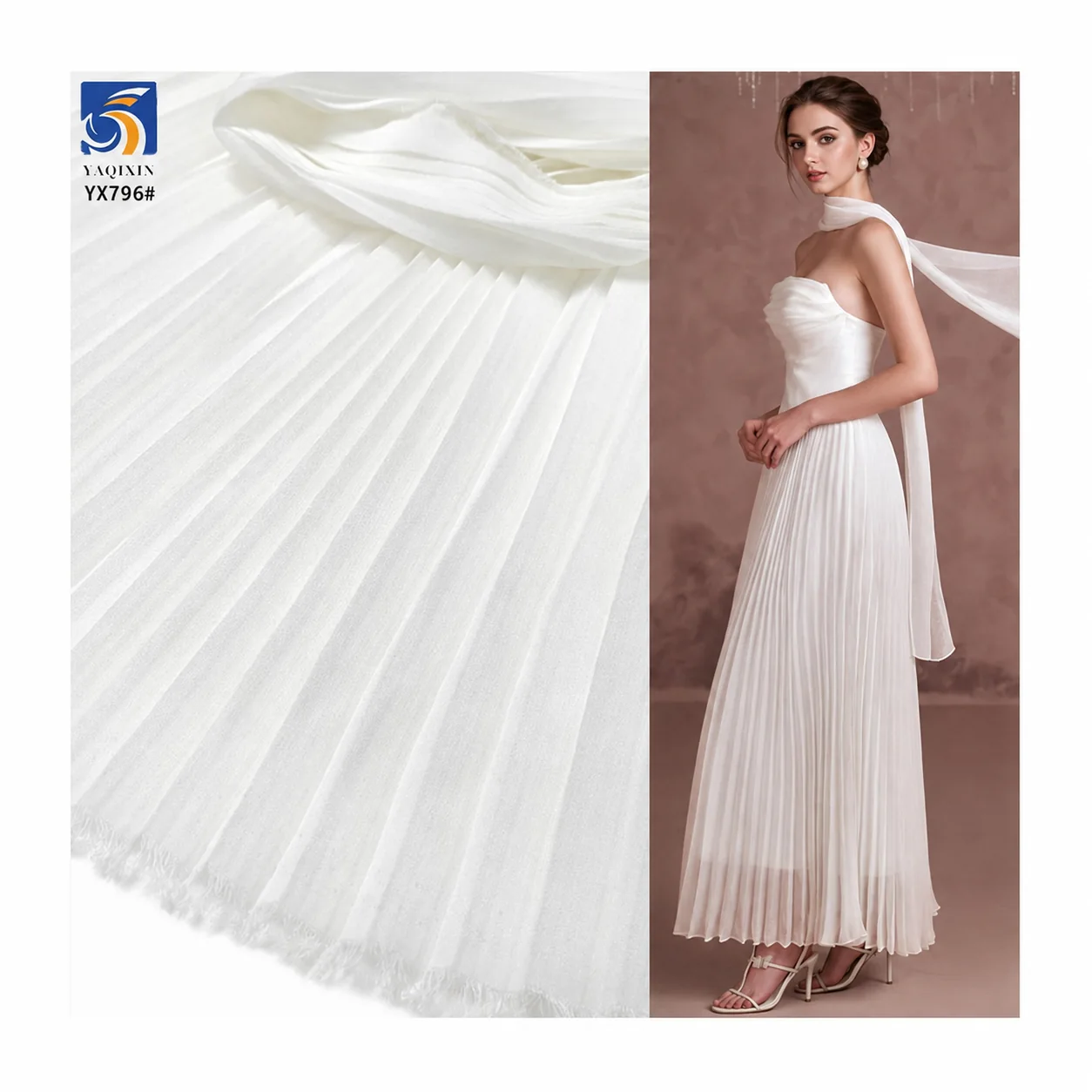
Pleats give a dress or skirt a visible rhythm, but the base fabric determines much of the final effect. A transparent overlay, a flowing skirt and a reflective eveningwear panel can all use pleated fabric while needing very different materials.
When selecting pleated fabric for dresses, compare chiffon, satin and tulle by the silhouette you want, the layers beneath it and how the pleats behave in construction. Then confirm the width and measurement conditions before planning fabric consumption. A fabric that looks right in a close-up photograph may still need a different lining, cutting layout or waistband treatment.
Compare the base fabric before comparing pleat size
Use these routes to narrow your sample request. The finished sample remains the deciding reference; fabric names do not establish exact stiffness, transparency or fibre content.
On a phone, swipe the table sideways to compare every column.
| Base fabric route | Dress or skirt effect to explore | Transparency and surface priorities | What to check in a sample |
|---|---|---|---|
| Pleated chiffon | Flowing accordion texture for skirts or dress panels | Review sheerness over the planned lining and the visibility of each fold | Hanging drape, pleat opening and the appearance of a finished hem |
| Pleated satin | More visible surface reflection for eveningwear or occasionwear | Compare highlights along the folds; confirm opacity in the chosen shade | Body, seam visibility and surface appearance after handling |
| Pleated tulle | Open-mesh layers and transparent textured overlays | Check mesh visibility, layer count and the underlying colour | Volume when layered, edge handling and the effect of the lining |
For a bridesmaid skirt, ask whether flowing movement or reflected light should lead the design. For a bridal overlay, decide how much of the underlayer should remain visible. For a pleated panel on a fitted dress, inspect the fabric at the panel's intended width rather than allowing the folds to open without restraint.
Avoid selecting a heavier option solely to obtain a more defined pleat. Base construction, the pleating process and the garment's support layers also affect the result.
Separate pleat spacing from usable width
A listed pleat distance is not enough to calculate a skirt panel. Ask what the number measures: the repeat between folds, the visible face of a fold or another agreed reference. Use a photograph with a ruler or an annotated sample to remove ambiguity.
Likewise, confirm whether the stated fabric width was measured with the pleats relaxed, partially opened or stretched flat. Ask for the usable cutting width under the agreed condition, excluding edges that cannot be used. Keep that condition consistent when comparing samples and quotations.
For example, YAQIXIN lists YX796 accordion pleated chiffon at 120gsm, 150cm width and 1cm pleat distance, while YX198 pleated satin is listed at 150gsm, 150cm and 7mm. The matching width figures do not prove that both provide the same relaxed panel coverage. Confirm the measurement basis before comparing yield.
Do not apply a universal fabric-consumption multiplier to pre-pleated materials. Develop the cutting layout from the approved sample, intended pleat opening and actual garment dimensions.
Plan pleat direction before cutting
Mark how the pleat lines run relative to the fabric edges and the garment. Vertical lines, horizontal lines and angled placements are different design choices; do not assume the supplied orientation matches the sketch.
Lay out the front and back panels together. Check that the folds have a consistent direction and that joins preserve the intended repeat. On satin, also compare the panels under the same light before deciding whether pieces can be rotated in the cutting layout.
For a skirt, confirm whether the width supports the required circumference or the intended skirt length in that orientation. Send the supplier a simple drawing showing panel dimensions and pleat direction. This is more useful than a request for “enough fabric for ten skirts.”
Sew a small panel before approving the fabric
Make a small construction sample containing the planned seam, hem and waistband or joining edge. Use the intended lining where relevant. A loose swatch cannot show whether the finished edge holds the folds as expected.
Observe whether the pleats open unevenly, whether the seam interrupts the repeat and whether the hem pulls the panel out of shape. Hang the sample and examine it after normal handling. Record the appearance with a ruler in view, using the same hanging position for later comparisons.
If a panel looks too full, too flat or uneven, adjust the pattern or construction and review it again. Keep the accepted sample and its measurements with the approval record. The broader fabric sample inspection checklist can support that record.
Evaluate care performance separately
Ask for the supplier's proposed care instructions, then review a sample after the intended care procedure. Compare pleat definition, panel dimensions, surface appearance and the relationship between shell and lining. Do not assume that polyester content alone guarantees unchanged pleats under every washing, steaming or pressing condition.
For fabrics suitable for home laundering, AATCC TM135 provides a method for assessing length and width changes. Its dimensional-change scope does not by itself establish pleat retention. If your buying specification requires formal pleat-performance evidence, agree the appropriate assessment, care conditions and acceptance criteria with the supplier or testing laboratory.
Buyer questions
Which pleated fabric is best for dresses?
Start with the effect: chiffon for a flowing textured route, satin for visible surface reflection, or tulle for an open-mesh overlay. Approve the sample in the actual garment construction and lining combination.
Does a smaller pleat distance mean less fabric is needed?
No. Pleat spacing alone does not establish usable width or garment coverage. Confirm its definition, the width measurement condition, pleat direction and cutting layout before estimating consumption.
Can I choose pleated fabric from photos alone?
Photos help shortlist the visual direction. A physical sample and small sewn panel are needed to assess transparency, pleat opening, edge behaviour and care performance for the intended garment.
Request a focused pleated-fabric sample comparison
Explore YAQIXIN's pleated fabric collection, which also includes YZT001 pleated tulle and YX936 pleated white satin. Send the garment sketch, preferred base fabric, colour, panel dimensions, pleat direction, quantity and destination through the collection page's inquiry options. Include any care or testing requirements so the sample discussion addresses your dress or skirt development brief.
Ready to discuss a fabric brief?
Share your intended application, a reference image or swatch, quantity, and market. We can help you compare a stock or custom fabric route before you place a bulk order.
Start a fabric inquiry